Explore SPARC’s publications and resources as we create, distil, evaluate and share evidence and best practice on research and policy that aims to support pastoralists and farmers in dryland areas.
This study builds on earlier SPARC-IDRC research on food prices in Mali and Sudan by looking at subsequent price changes and their drivers, effects, and public responses from 2023 to mid-2025.
This journal article assesses the persistence of pastoral livelihoods despite far-reaching social, political, economic, and technological change over the last 45 years (1975–2020).
This paper presents a scoping review of literature to assess what is known on WCIS for pastoralists from Web of Science, Google Scholar and selected organisations working in these fields.
This brief looks at what ‘people-centred’ EWS means, particular challenges of improving it in conflicts and recurring crises, and the implication of a knowledge-system way of thinking about EWS.
This brief suggests how to think differently about DRR in conflicts, rather than how to implement it, and draws on evidence that it is necessary and possible even in conflicts and recurring crises.
This policy brief reflects SPARC’s learning on why the main models used by the international humanitarian community for planning anticipatory action show limited promise in difficult places and what alternative approaches might be more helpful.
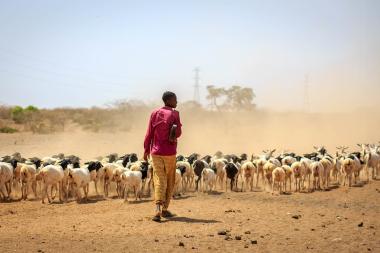
A pastoralist moves his livestock through Ganawuri town, Nigeria. Credit: Elphas Ngugi/SPARC
In advance of the 2025 Global Platform for Disaster Risk Reduction, SPARC researchers have prepared three draft discussion documents drawing on six years of SPARC research.
Dynamic Drylands is SPARC's podcast which explores new ways of thinking about aid, development and resilience in the drylands of Africa and the Middle East.
This report, funded by SPARC and prepared at the request of the G20 Presidency, highlights the potential for more rapid progress to eradicate extreme poverty.