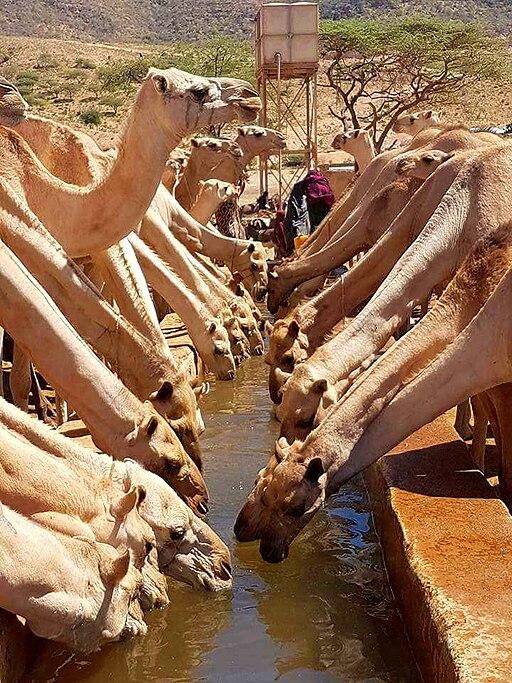
Do new permanent water supplies in the drylands help build resilience? The impacts of new boreholes on coping with drought in Ethiopia and Kenya
The current approach to providing new water supplies is undermining pastoralists’ resilience, not enhancing it. This report covers nine sites across Marsabit Co., Kenya and Somali Region, Ethiopia.
Permanent water supplies are often assumed to have a positive impact on climate resilience. However, there are concerns about potential negative effects of water supply developments in drylands on grazing patterns, settlement and conflicts. To manage these risks, planning for water investments must be informed by evidence (not assumptions) on their links with resilience.
Study teams visited four sites in different sub-counties in Marsabit County, Kenya, and five sites in Geshamo and Dagahbur districts in Somali Region, Ethiopia. We looked at:
- the literature and had consultations with experts;
- the sites' impact on people’s resilience and ability to cope with the most recent drought;
- how far any improvements will provide longer-term resilience to climate change impacts;
- the perceptions of different stakeholders on the role of new water supplies in resilience strategies and climate adaptation;
- the plausible causal chains leading from a new water source to resilience, as broadly understood;
- the impacts of water sources on resilience from as many perspectives as possible.
Findings
- Only around half the boreholes visited were functional, and most of those were providing only saline water, causing health problems.
- Formal management systems often lacked accountability, and indigenous systems had been sidelined.
- Women benefited from reduced water-fetching burdens but boreholes did not support irrigation or other economic activities. Any economic benefits were often captured by elites.
- The boreholes led to settlement, overgrazing and rangeland degradation, undermining mobility. Water projects had been used to advance claims for resources, leading to conflict.
- Boreholes did not reduce livestock losses during the 2021–23 drought or help pastoralists cope better.
Policy implications
- The current approach to providing new water supplies is undermining rather than enhancing pastoralists’ resilience.
- Mobility must be recognised as the key adaptation strategy for pastoralists in the Horn of Africa.
- Settlements and overgrazing caused by new water supplies in fallback grazing areas exposes pastoralists to drought.
- Integrating traditional governance mechanisms in the management of water supplies would help to prevent social fragmentation and conflict.
- Urgent action is needed to manage salinity problems in water supplies.