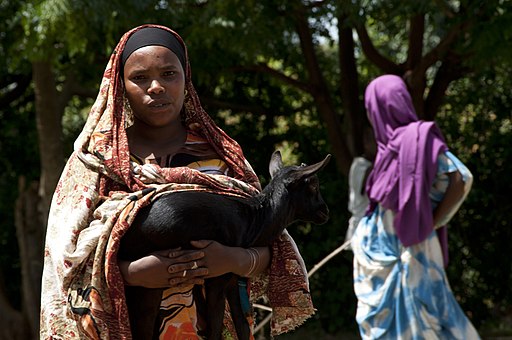
Business model innovation for behaviour change within the goat value chain in Ethiopia: implications for policy and investment
This policy brief outlines actions policymakers and donors can take to strengthen Ethiopia's goat value chain and drive behaviour change and resilience.
Livestock contributes 12–15% of Ethiopia’s Gross Domestic Product (GDP) and underpins rural livelihoods. Yet fragmented markets, weak finance, poor infrastructure, and informal trade valued at US$250–300 million annually constrain growth. Donor-led cooperatives and subsidies have brought short-term benefits but limited integration.
With shrinking aid budgets, policy must focus on scalable, cost-effective models. The Resilience in Pastoral Areas (RiPA) project aimed to embed incentives within existing goat-trading networks to strengthen trust, access to credit, and market alignment. Evidence shows that every US$1 invested in livestock market integration generates US$3–5 GDP, underscoring its importance for rural employment, exports and government revenue.
Our research examined whether embedding incentives in the goat value chain could drive behaviour change and resilience. The aim was to identify ‘best buys’ that deliver durable change, strengthen competitiveness and reduce reliance on informal trade. Our hypotheses were that: low-cost digital tools can reshape sales planning, trust-based credit fills gaps but is fragile without formal mechanisms, and transport infrastructure enables scaling, especially for women.
Key questions were:
- How do market actors adopt new practices with information, credit and transport support?
- What mechanisms sustain trust and partnerships?
- Which interventions offer best value for donors and policymakers?
Research findings were:
- Digital information (phone/WhatsApp) drove alignment of sales with demand peaks, fattening and weight-based selling; weak telecoms limited reach.
- Credit was trust-based, which sustained relationships but at the risk of heavy losses in cases of default. Women collectors were reliable but lacked safety nets.
- Transport support, though rare, enabled scale, reduced costs and improved women’s participation; poor roads and high fuel costs limited impact.
- National buyers invested little, with few using veterinary intermediaries.
Policy implications are:
- Best buys included low-cost digital tools, veterinary checks and co-financed feeder roads; transport trucks were vital but prohibitively costly.
Donors and policymakers should prioritise three best buys:
1. Expanding rural telecom and digital market tools to align supply and demand
2. De-risking trust-based credit with escrow systems, blended finance or guarantee funds, particularly benefiting women traders
3. Co-financing feeder roads, market centres and shared trucking to reduce costs and expand inclusion.
- These measures can shift trade from informal to formal, boosting government revenue while offering strong returns on investment. RiPA’s approach shows that embedding incentives in trading networks delivers durable change and strengthens Ethiopia’s goat value chain.