Explore SPARC’s publications and resources as we create, distil, evaluate and share evidence and best practice on research and policy that aims to support pastoralists and farmers in dryland areas.
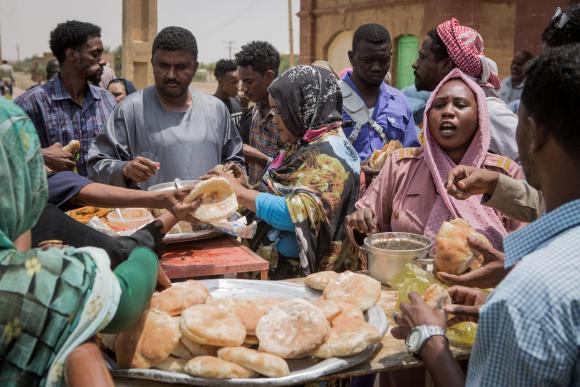
This study builds on earlier SPARC-IDRC research on food prices in Mali and Sudan by looking at subsequent price changes and their drivers, effects, and public responses from 2023 to mid-2025.
This journal article assesses the persistence of pastoral livelihoods despite far-reaching social, political, economic, and technological change over the last 45 years (1975–2020).
This report sets out to see if it is possible to assess the impacts PWP assets have on people’s livelihoods in order to learn new lessons about how, when — or whether — to use PWP.
This report provides new data about the current and potential future losses and damages from climate-attributable weather events in the Sahel and Horn of Africa, with a specific focus on the agriculture and livestock sectors.
Despite efforts to link humanitarian responses and development programming, gaps in effectively aligning and integrating the two aids still exist. How can we move towards effective integration?
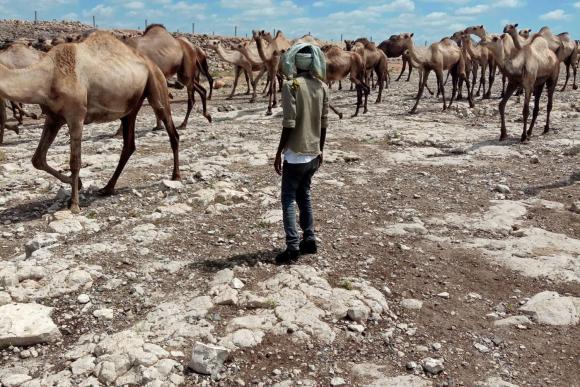
This paper studies the causal link between forage condition and food security in northern Kenya and southern Ethiopia, and explores the mechanisms through which the effects occur.
This policy brief explores the challenges pastoralists face when using climate information services (CIS). It outlines key considerations for scaling up effective CIS in drylands.
This policy brief shares experiences of using crowdsourced data to observe changes in food security attributable to drought in hard-to-reach and fragile areas of Ethiopia and Kenya.
This brief introduces AfriScout, a digital app that shows potential for mitigating some of the challenges pastoralists face by providing them with information to make more informed decisions.
This brief recommends that the Ethiopia Disaster Risk Management Commission, supported by international partners, establish a specialist ENSO–IOD facility to plan for the impact of a drought in 2024.