Flagship report
Aid at a crossroads: adapting to drylands realities
Drawing on six years of research, this synthesis report outlines practical ways to make aid in fragile drylands more flexible, locally grounded and effective.
Éditeur SPARC
Drylands are among the world’s most fragile and strategically important regions, yet aid systems continue to struggle to deliver lasting impact in these contexts. As humanitarian needs rise and funding shrinks, Aid at a crossroads argues that the challenge is not simply to do more with less, but to fundamentally rethink how aid works in crisis-affected drylands.
Drawing on six years of SPARC research across East and West Africa and the Middle East, the report shows that conventional, technocratic models of aid - designed for stability and predictability - are poorly suited to environments defined by uncertainty, climate shocks and conflict. While emergency assistance saves lives, an over-reliance on short-term responses has too often failed to address the underlying drivers of vulnerability or to support the systems that people already use to cope with crisis.
Written primarily for implementers, policy-makers and funders, Aid at a crossroads sets out practical ways to work differently: strengthening local capacities to navigate uncertainty, embedding flexibility into how aid is funded and delivered, and embracing the complexity of drylands contexts rather than trying to simplify them away. It is accompanied by a sister report, The drylands of tomorrow: pathways to prosperity, peace and resilience.
Key messages
- Recognise and engage with complexity. Drylands are shaped by intersecting climate, conflict and social dynamics. Linear theories of change and standardised solutions routinely fall short. Aid actors must invest in deeper contextual understanding and adaptive approaches that reflect how people actually live and cope in these environments.
- Reframe how success is measured. Short-term, easily quantifiable outputs miss what matters most for long-term resilience. Aid should value relational outcomes - such as trust, social capital and local ownership - and adopt accountability frameworks that allow results to emerge over time.
- Operate with flexibility at the core. Uncertainty is not the exception in the drylands; it is the norm. Funding, management and monitoring systems must enable programmes to adapt, shift priorities and respond to change in real time, trusting front-line teams to make context-driven decisions.
- Invest in informal social systems. Mutual aid groups, local markets and community networks are often the first and most reliable responders in crises. Supporting and strengthening these systems can deliver wider reach, better value for money and more sustainable impact—especially where formal aid access is limited.
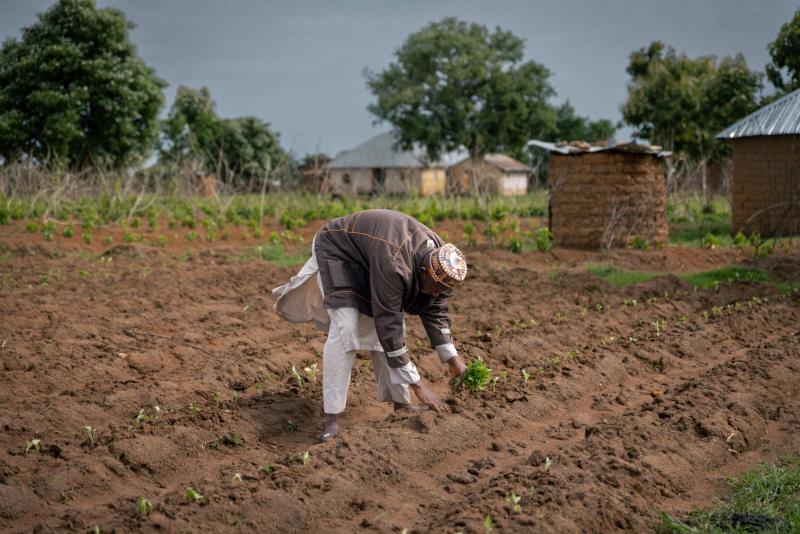
Farming in Ganawuri, Plateau state, Nigeria. Photo: Elphas Ngugi / Supporting Pastoralism and Agriculture in Recurrent and Protracted Crises (SPARC)