Flagship report
The drylands of tomorrow: pathways to prosperity, peace and resilience
This synthesis report brings together key SPARC learnings around the challenges and opportunities facing pastoralism and agriculture in the drylands, and where future investment might be most effective.
Publisher SPARC
This report synthesises insights from six years of SPARC research to take stock of the key challenges and opportunities facing pastoralism and agriculture in the drylands today, and to reflect on where future investment and support might be most effective.
Focusing on SPARC’s key themes of peace, prosperity and resilience, it explores both challenges to and factors enabling progress for those making their way in the drylands. Rather than offering operational guidance, it aims to challenge prevailing assumptions and propose alternative, grounded narratives that can inform strategic thinking. In doing so, it offers a realistic picture of what does and does not work, setting out implications for decision-makers in private and public sectors – those shaping projects, initiatives, policies and investments in the years ahead. It is accompanied by a sister report, Aid at a crossroads: adapting to drylands realities.
Key messages:
- In the drylands, sustainable prosperity and peace usually come from incremental, locally grounded change, not large-scale transformation. The drylands are often framed as marginal, unproductive places requiring large-scale transformation: a narrative which shapes a growing wave of expansive investment projects, including commercial irrigation schemes, renewable energy installations and resource extraction initiatives. But SPARC research shows that it is usually not sweeping schemes, but small-scale, iterative investments in these everyday livelihoods that matter most to future prosperity.
- What does real progress look like, and who decides? Development programming often defines problems and measures success using generic, composite language. Yet these broad measures frequently fail to reflect what matters most to people in specific places - leading external development partners to misdiagnose challenges and undermine effective responses. This disconnect will persist unless the systems that drive aid and policy accountability get better at valuing and responding to what local people define as progress.
- Collective practices are key to resilience and development in the drylands. External support should enhance these existing dynamics through better recognition and support, and should encourage integrated solutions that address multiple interconnected challenges simultaneously, prioritising long-term investments that enhance collaboration between different kinds of formal and informal governance.
- The flexibility of local livelihoods and knowledge must be recognised. In the drylands, livelihoods are constantly adapting to shifting environmental, social and economic conditions. Yet policies often rely on rigid categories and one-size-fits-all solutions that fail to recognise flexibility and interconnectedness – an approach that limits opportunities for innovation and growth, and which attempts to stabilise or return to a ‘normal’ baseline. Supporting the interactions between pastoralists, farmers, traders and others – rather than treating them as separate sectors – can strengthen the kinds of practical networks and relationships that help people adapt.
- Negative narratives have enduring power. The challenges faced in the drylands today are not the result of inherent vulnerability. The drylands are not empty or inherently vulnerable; they are underserved. Supporting better futures means reshaping how drylands are spoken about and understood. This includes recognising the value of local strategies already in place and ensuring that investments reflect the realities and priorities of those living in these landscapes.
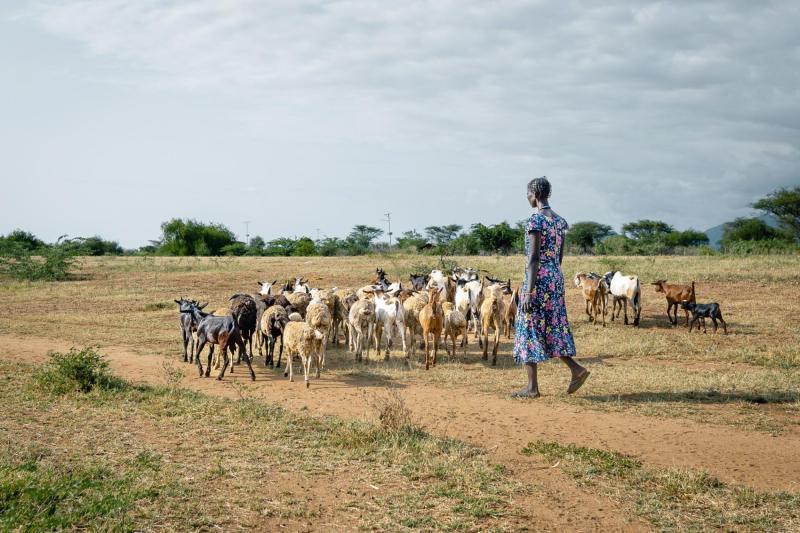
Livestock keeper in Turkana, Kenya
Credit Credit: Elphas Ngugi / Supporting Pastoralism and Agriculture in Recurrent and Protracted Crises (SPARC)
Download
application/pdf
193.77 KBapplication/pdf
1.93 MB